President Donald Trump can’t rename the Kennedy Center in his own honor, a federal judge ruled last week—and he can’t close it down for a two-year, $257 million renovation after the nation’s 250th birthday celebrations on July 4 either. In a 94-page opinion on Friday responding to a lawsuit from Representative Joyce Beatty (D-Ohio), Judge Christopher R. Cooper ordered the center remove Trump’s name from the building façade and the venue’s website within two weeks.
Cooper also issued a parallel ruling in a lawsuit from the DC Preservation League and seven other plaintiffs seeking to block renovation work. The judge granted a partial preliminary injunction on the planned shuttering of the performing arts center, until the board reevaluates the necessity of the closure.
It’s a major setback for the president in his effort to take control of and remake the traditionally nonpartisan organization, which has been a “living memorial” to assassinated President John F. Kennedy since its opening in 1971. Congress passed a 1964 law naming the center in his honor, and Cooper ruled that a name change would require an act of Congress—not just a vote from the Trump loyalists on the Kennedy Center board, who in December tried to rechristen it “The Donald J. Trump and the John F. Kennedy Memorial Center for the Performing Arts.”
I’ve been following the Kennedy Center saga with interest—not least of all due to a behind-the-scenes account of what it was like to work there under the Trump regime, published in the Atlantic by a terminated employee the very same day of my own ouster from Artnet News.
Author Josef Palermo, like me, was the victim of mass layoffs, one of dozens of staffers the Kennedy Center let go on March 26. But while I spent the few hours before IT disconnected my system access saving interview transcripts, Palermo was scrambling to safeguard the center’s art collection.
A Troubled New Era
The Kennedy Center has had a rough go of it since Trump began his second term last February. Out was longtime board chair David M. Rubenstein, and Deborah Rutter, the center’s leader of 10 years. Arts neophyte Richard Grenell became interim executive director, and board newly packed with MAGA loyalists appointed Trump as chairman.
“We cannot have arts institutions that lose money because you have programming that is woke or not popular,” Grenell told PBS, arguing that the Kennedy Center had been in financial trouble under his predecessor.
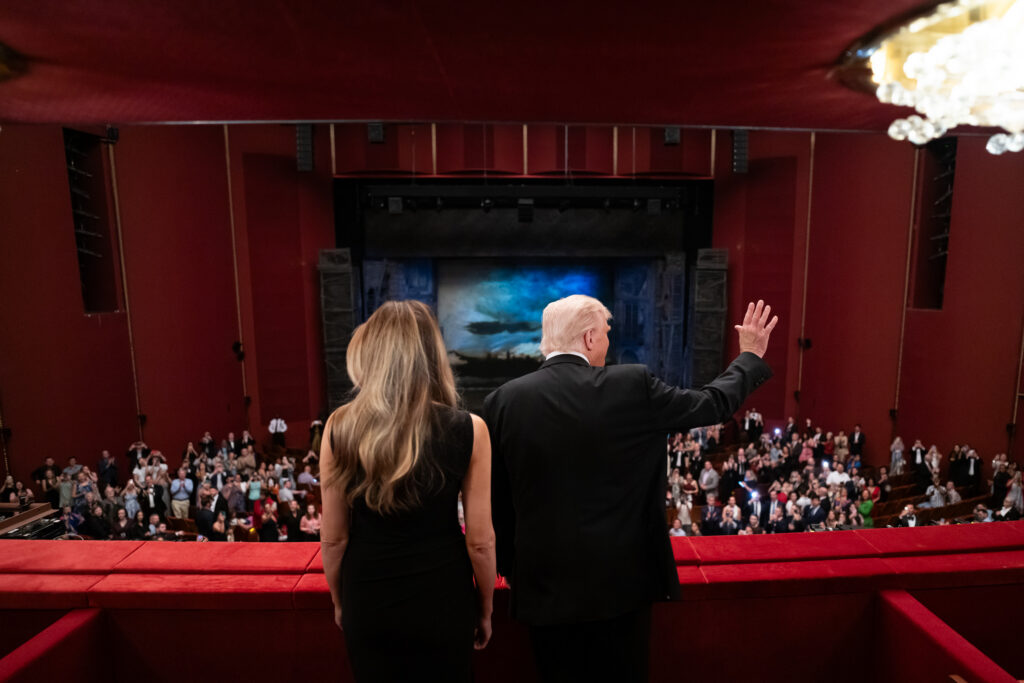
But ticket sales have fallen precipitously since the takeover, with over two dozen performers and productions boycotting the center or canceling performances. Among them are soprano Renée Fleming, composer Philip Glass, comedian Issa Rae, the musical Hamilton, the Martha Graham Dance Company, and the Washington National Opera, a former anchor tenant that is permanently relocating. At the opening night gala for the venue’s production of Les Misérables, with Trump in attendance, 12 cast members reportedly refused to take the stage, and a quartet of drag queens crashed the evening in protest.
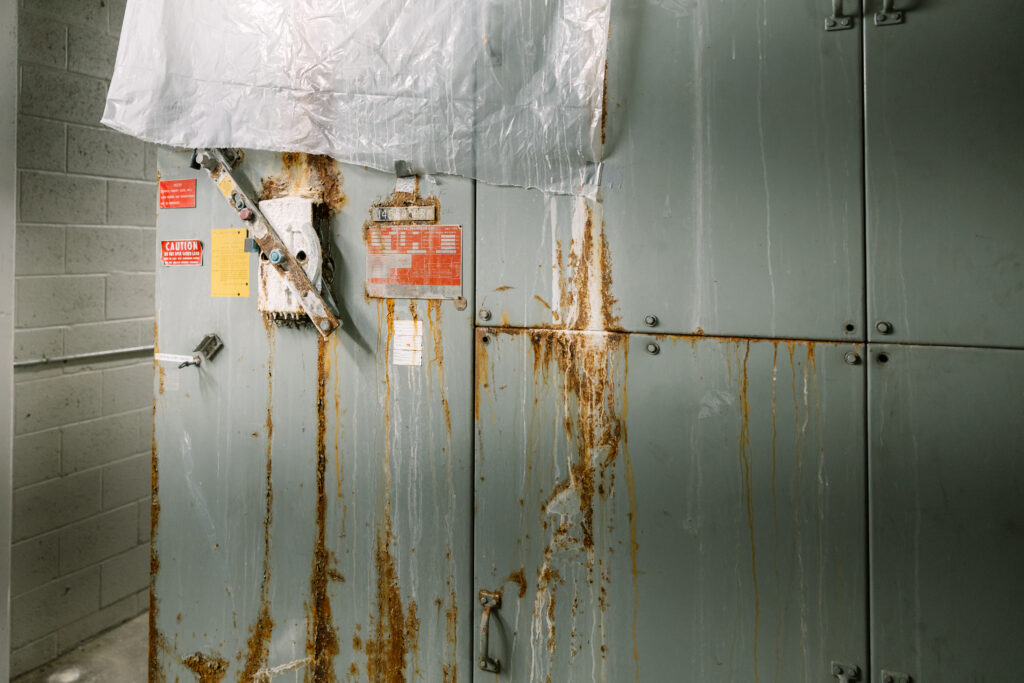
So when Trump announced that the center would close for two years of renovations, many of the president’s critics questioned his motive. The aging center had water damage and needed work, but why not make improvements while continuing normal operations?
“Is it renovations, or is it that he couldn’t fill the seats? You tell me,” Representative Alexandria Ocasio-Cortez (D-N.Y.) asked.
Protector of the Arts
Palermo joined the Kennedy Center with considerable reservations. He had first reached out to Grenell to see if the Kennedy Center would want to participate in a series of ephemeral events on the National Mall he was planning with a nonprofit for the America 250 celebrations. The conversation led to an unexpected job offer, as the center’s first curator of visual arts and special programming.
Assured that his political views as a non-Trump voter were not a problem, and that he would have full creative control of exhibitions and programming, Palermo took the job. He believed he could help the Kennedy Center through a difficult chapter in its history while organizing quality exhibitions and programming.
Instead, Palermo hit roadblock after roadblock, forced to work with Trump appointees with little-to-no art knowledge, like a former Toyota dealership marketing and events manager married to a Republican National Committee leader.
Palermo proposed three exhibitions about artistic trailblazers in American history, covering music, street art, and technology in art, but never received budgetary approval. When he tried to convert an empty room into a gallery for a new visual arts program, his colleagues instead tried to convince a Middle Eastern or Central Asian country to buy the naming rights to the space and turn it into a lounge. Palermo also reportedly had to fend off ethically questionable requests to exhibit an artist in Grenell’s personal collection.
Then, after 10 challenging months, Palermo was out of a job.
“My institution,” he wrote, “had been on fire for months.” But protecting the Kennedy Center was no longer his concern.
A Little-Known Art Collection
When I was covering this story at Artnet News, I actually got an email from a concerned citizen voicing his fears over the fate of the Kennedy Center Art collection. The gist of it was, there’s a ton of art at the Kennedy Center, and it shouldn’t be allowed to disappear into a black hole when Trump shut the place down.
Palermo’s story suggests that fears that the center’s art collection could be lost were not misplaced. He said that Grenell told him to “get rid of everything,” in order to bring in all new art when the building reopened. And if the original donors wouldn’t pay to move and store works, Palermo should “put them up for auction or give them away.”
So what art is (was?) at the Kennedy Center?
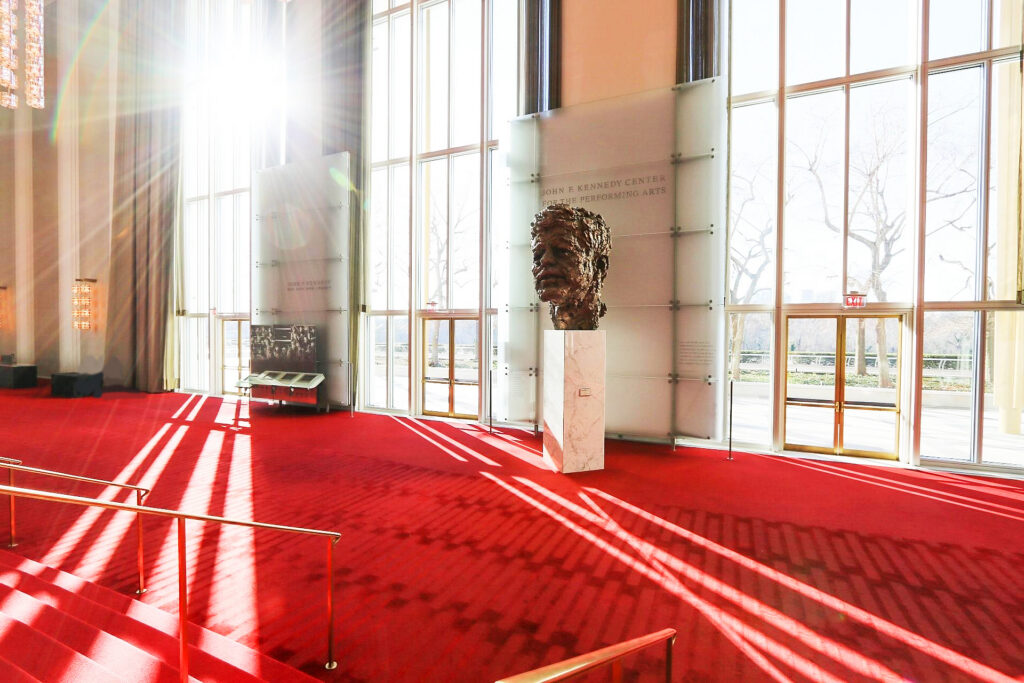
The best-known piece is an eight-foot-tall, 3,000-pound bust of JFK by Robert Berks. It, at least, will stay, according to current leadership.
There is less information online about other pieces in the collection, but I did track down a 2022 pamphlet detailing the center’s “Artistic Gifts and the Artists Who Created Them.” It features 88 artworks, gifts from 36 countries and a number of individual donors, as well as new art on display at the Reach, the expansion to the complex that opened in 2019.
Some of the works in the collection by prominent artists include a Dale Chihuly chandelier, a Dustin Yellin sculpture, a pair of Henri Matisse tapestries donated by France in 1971, and a Barbara Hepworth sculpture donated by the U.K. in 1971.
Palermo also wrote of his concern for Una Hanbury’s bust of Julius Rudel, the center’s first artistic director, and a large wooden carving installation by Nehemia Azaz in the Israeli Lounge. One of his last acts was to email Rudel and Azaz’s families, and let them know he could not update them on the works’ status anymore.
An Uncertain Future
Artwork at the Kennedy Center had already begun to disappear before Palermo’s departure, he said. In the African Room, handmade textiles, a wooden sculpture carved in memory of Kennedy, and a pair of carved Yoruban wooden doors, all came down when plaque honoring a new donor went up. The official line is that they’ve been moved to “ensure safekeeping” during construction.
In March, Trump announced that Grenell would be stepping down. The center’s board promoted the 39-year-old vice president of facilities operations, Matt Floca, to president and executive director, just 10 days before the layoffs.
Thus far, Floca’s tenure seems to have consisted largely of a PR campaign highlighting the physical woes of the building, and the supposed necessity of a long-term closure to address these concerns. (Palermo said the center “certainly had issues but could have been upgraded piecemeal, without needing to close the entire complex.”) Floca also reportedly told the judge that the center had raised only tens of millions of dollars in 2025, not the $130 million claimed by Grenell.
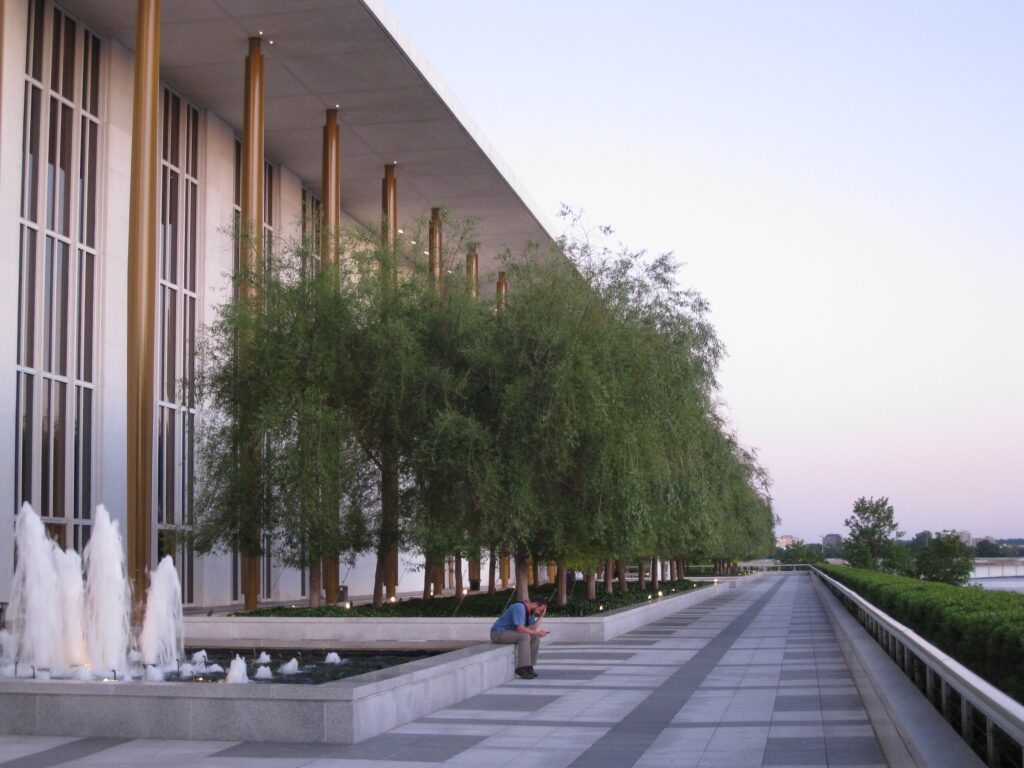
Trump’s planned ballroom addition to the White House has already resulted in the demolition of the historic landmark’s East Wing. It is logical to fear for the Kennedy Center, designed by modernist American architect Edward Durell Stone, with a façade made from 3,700 tons of Carrara marble donated by Italy. (Trump has not even committed to saving that stone, telling reporters that “some of the marble comes down.”)
But Floca’s representation of the planned work during sworn testimony has seemed more modest in scale than the vision described by Trump. Cooper’s ruling was that “the Kennedy Center does not appear poised for large-scale demolition and rebuilding,” but that “the paucity of public information about the Kennedy Center’s renovation plans” does give cause for concern. He called the planned closure an “ill-informed and seemingly preordained decision.”
Right now, the last slated Kennedy Center programming is the run of Bluey’s Big Play, through July 5, and “a heartfelt celebration of God and country” called “The Freedom Gathering: A Musical Celebration,” on July 3. It sounds like a truly bizarre event, headlined by Jack N. Graham, pastor of Prestonwood Baptist Church in Plano, Texas, with Utah’s American Festival Choir and several expressly Christian acts.
Cooper’s ruling calls for a joint status report within seven days from the Kennedy Center and the DC Preservation League to determine next steps. It does allow restoration work to continue until the judge determines whether work should be carried out during regular Kennedy Center operations, or if the closure is in fact necessary. The Kennedy Center did not respond to my request for comment.
What will happen next remains to be seen. Secretary of the Interior Doug Burgum told CNN that he wasn’t sure if Trump would appeal the order to remove his name from the institution. If it does stay open, the Kennedy Center will have to scramble to bring in new programming—a process that normally takes years, and would involve employees who have already been laid off. And would audiences even show up?
Trump is now threatening to abandon his efforts to revamp the Kennedy Center entirely. “The Kennedy Center will soon be closed, probably never to open again,” he wrote on Truth Social. In an earlier post, Trump proclaimed that if the judge’s decision put a hitch in his desired renovation work, “I have no interest in continuing what could only be a hopeless journey.”
It may be one already, an anonymous staffer recently told the Atlantic. “We’ve already shot ourselves in the foot. It would be a Herculean effort to try and salvage the absolute mess this has become.”
If you enjoyed this piece, please subscribe for either a free or paid subscription. Your support of independent art journalism is greatly appreciated.
Responses
I hate trump.
Excellent piece, Sarah. Truly heartbreaking it has gone this far and caused so much damage. I do choose to believe however, that the incredible artists in this country and supporting patrons will bring it all back☮️