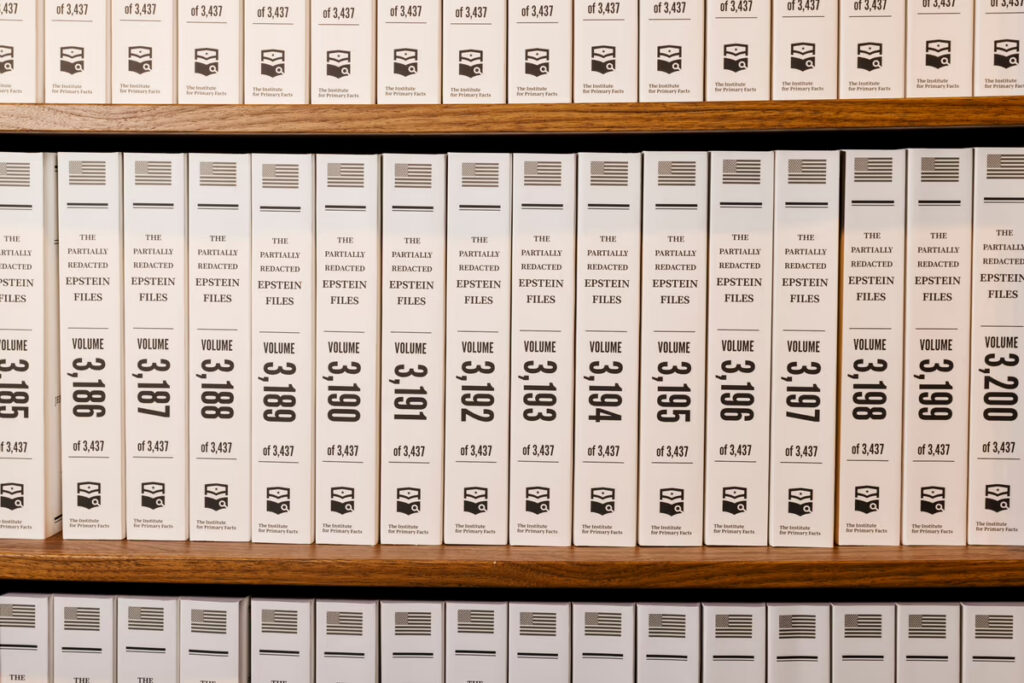
The sheer volume of the Epstein files is hard to comprehend, with some 3.5 million documents released by the Department of Justice—and approximately 2.5 million believed to be still under seal. But if trying to sift through the files on the online portal is overwhelming, it is another thing entirely to see this library of evil take physical form, as it did this month at a pop-up gallery exhibition in Tribeca.
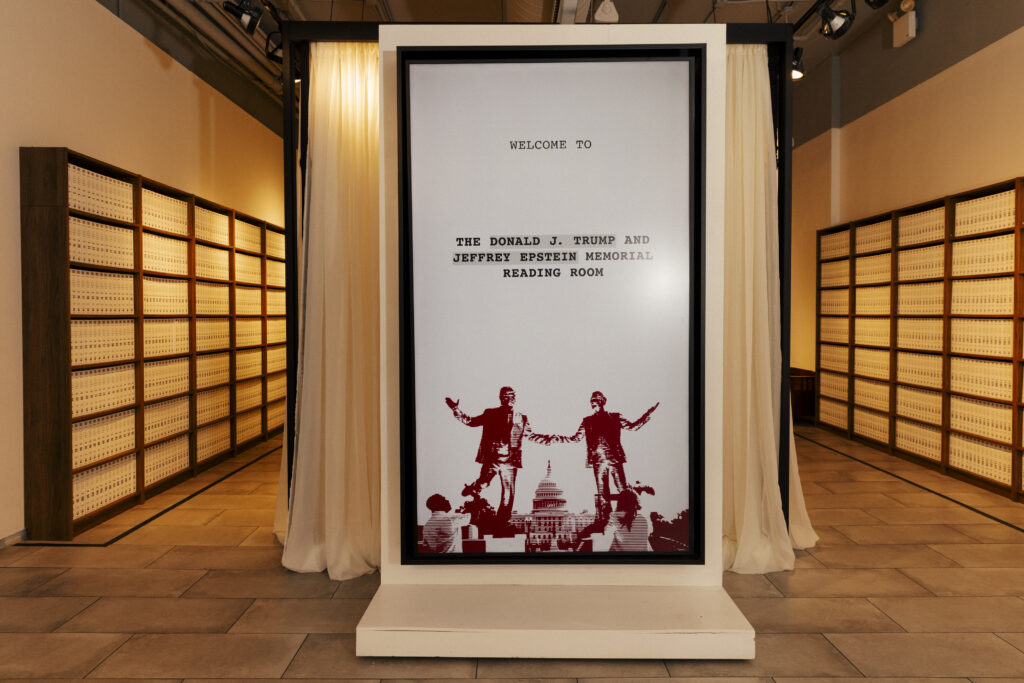
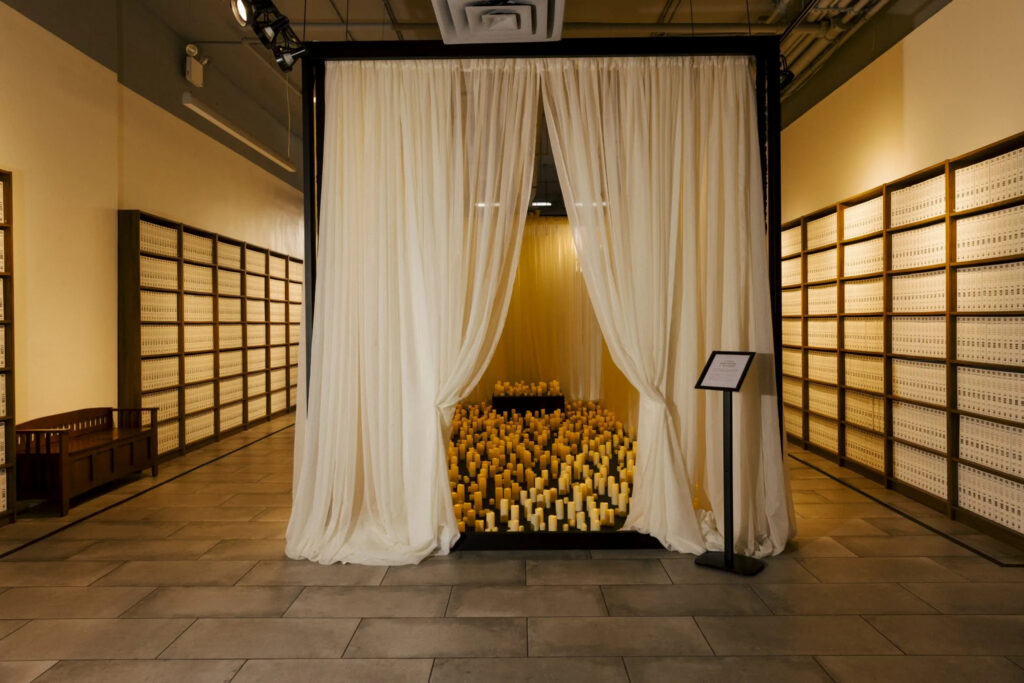
Walking into the Donald J. Trump and Jeffrey Epstein Memorial Reading Room, hosted by Mriya Gallery on Reade Street after four other venues passed, I felt a heaviness in the air. The bookcases lined the wall, the files printed and bound into 3,437 volumes—each one 800 pages, and a record of the life and crimes of child sex offender Jeffrey Epstein.
The physical weights of these pages? Some 17,000 pounds.
Visitors were not allowed to go through the files, so as to protect the victims whose names were not properly redacted in the release. But the knowledge of what those volumes represented, and the crimes Epstein and his associates committed against at least 1,200 women and girls weighed on me. Almost immediately, I began to cry.
A Darkness That Hits Harder
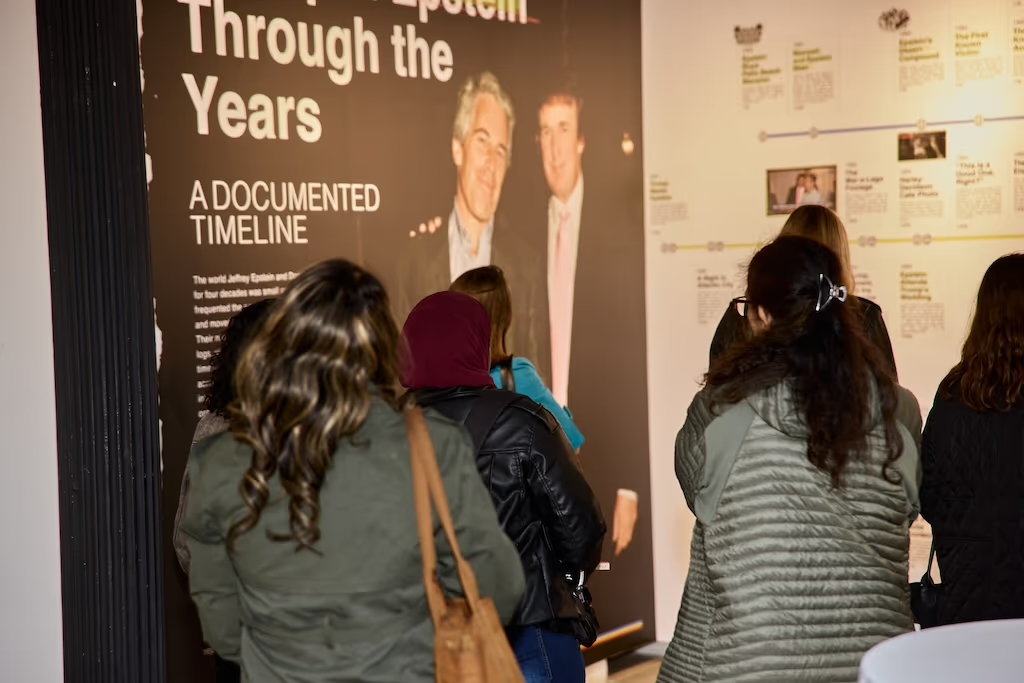
One of the first things that struck me was that almost every visitor who was there was a woman. There was a reporter from Telemundo and his cameraman, and two men there with their wives or girlfriends. A few more men filtered in during the hour or so I spent visiting, but it was predominantly women who had made a pilgrimage to this space, to bear witness to these crimes, and the complicity of our government and President Donald Trump.
They spoke in hushed tones. Young, old, white, Black, and brown. For each one of us, I think it is safe to say, the exhibition was a sobering reminder of the violence routinely inflicted on women by men. A reminder that our bodies are all too often reduced to objects, sexualized and dehumanized, even from childhood.
“It just keeps getting worse and worse and worse,” I heard one woman murmur to her friend. It was easy to agree.
I know plenty of men (hopefully most men) are disgusted by the crimes of Jeffrey Epstein. But as a woman, the extent of his depravity, and the degree to which it was willfully ignored—if not tacitly accepted or full-on supported—by so many wealthy and powerful people, feels especially chilling. It reflects a general disregard for women’s lives and dignity that is hard to fathom.
Paying Respect to the Victims
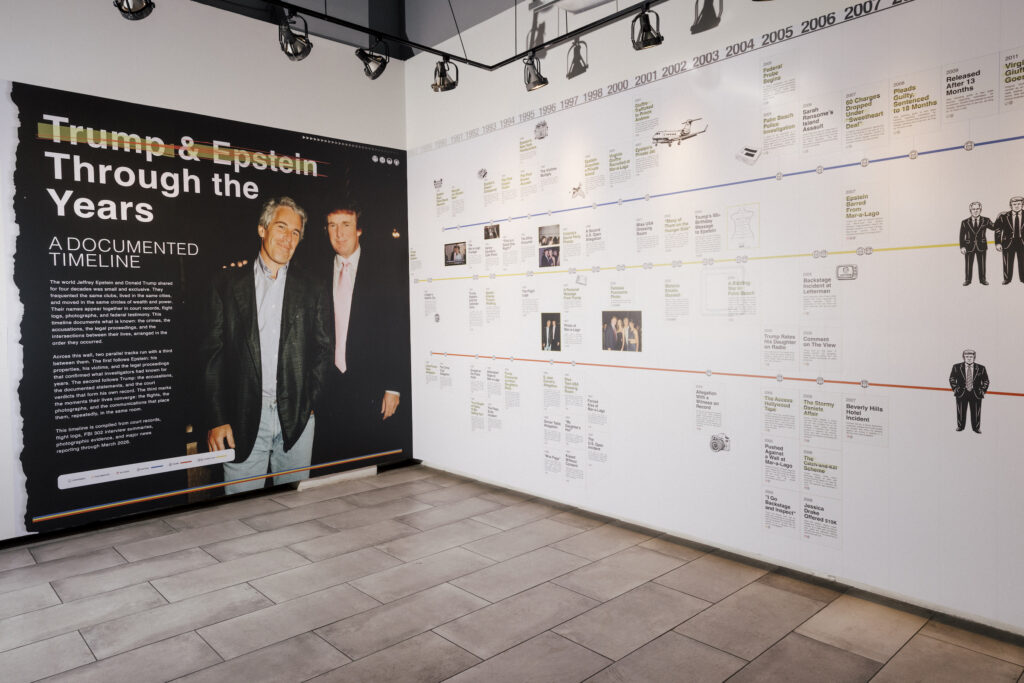
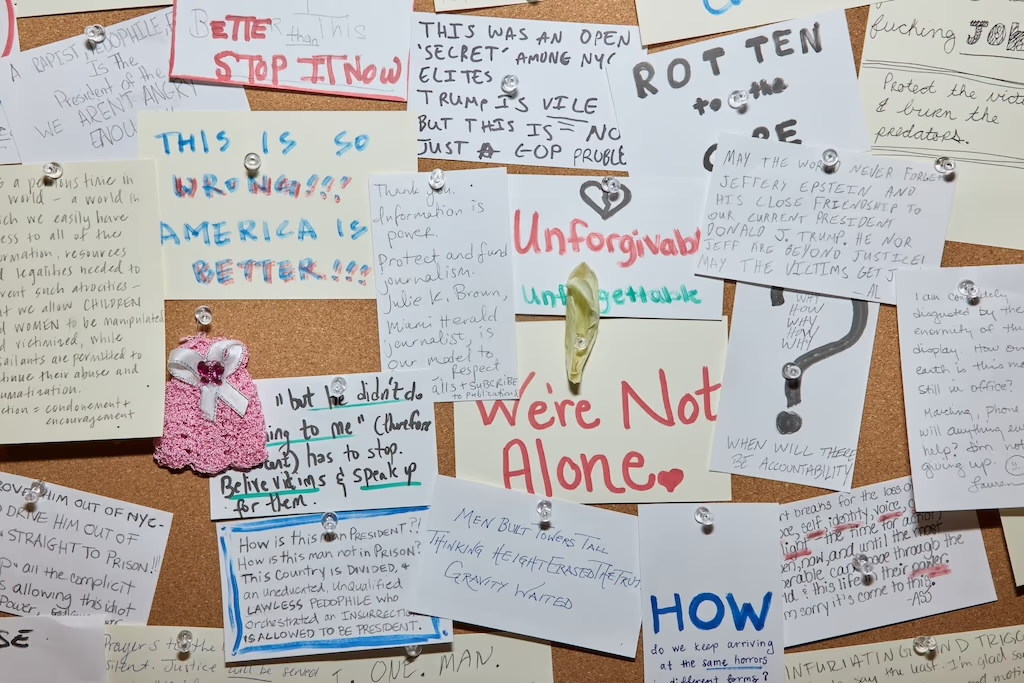
The exhibition centers the relationship between Trump and Epstein, with an entire wall covered with a timeline covering both the allegations of sexual assault and harassment against both men, as well as the known details of their friendship. (That includes the lewd drawing Trump allegedly made for Epstein’s 50th birthday.) But the show also makes space for the women who suffered at their hands. Several visitors have affixed index cards to the wall with handwritten accounts of when they met Epstein and became victims of sexual trafficking.
And the center of the gallery is dedicated to a tribute to the survivors and victims, with a simple but effective display of 1,400 flickering electric candles surrounded by white curtains. A sign reminds visitors that the pages of the Epstein files “chronicle the very real traumas and heroic bravery of human beings who were trafficked and abused.”
There is not enough space to display all the volumes in the room, so the bookshelves continued downstairs, along with bulletin boards where visitors responded to the exhibition by writing notes expressing a heartfelt mix of anger, sadness, disbelief, and defiance.
It was easy to feel powerless reflecting on the lack of justice in this case—there have been no arrests in the U.S. since the release of the files, and Ghislaine Maxwell remains the only one of Epstein’s associates to face jail time for their complicity in the sex trafficking ring. (Read my round-up of who in the art world has faced any consequences whatsoever for their ties to Epstein here.) But the exhibition also included desks where you could sit and call the DOJ, with a helpful script demanding the release of the rest of the files.
An Opening Salvo
The exhibition, which was the first stop in a planned tour across the U.S., is produced by the Institute of Primary Facts, a nonprofit founded last year by David Garrett, who the New York Times described as “a Michigan-based entrepreneur.” The show is part of what the institute is calling “The Trumpsonian: A Fake Museum of Real Truth,” a series of events blending art, theater, and political activism.
Organizers have reported over 10,000 visitors during the exhibition’s 16-day run in New York. The next stop will be in Washington, D.C., timed to Trump’s birthday on June 14. A GoFundMe campaign to support the project has raised $9,973 toward a goal of $60,000.
The Guardian questioned the value of the project, which it claimed “bears the distinct whiff of the Museum of Ice Cream,” the famed Instagram trap. But I felt real emotion in that room. For the time I was there, it was as though I was channeling the pain, the rage, the sorrow, and the resilience of women around the world who know all too well the realities of sexual discrimination, harassment, and violence.
And sadly, the need for this exhibition is all too real. The Trump administration will continue to minimize the Epstein files, and the crimes contained within them—and to distract us from the need to prosecute those involved.
We need to employ all the tools at our disposal to ensure this push for amnesia fails, including art and social media. We need to keep applying pressure, keep calling for justice, and keep demanding that the rich and the powerful be held accountable for their crimes. We need the Donald J. Trump and Jeffrey Epstein Memorial Reading Room.
“The Donald J. Trump and Jeffrey Epstein Memorial Reading Room” was on view at Mriya Gallery, 101 Reade Street, New York, New York, May 8–24, 2026.
If you enjoyed this piece, please subscribe for either a free or paid subscription. Your support of independent art journalism is greatly appreciated.