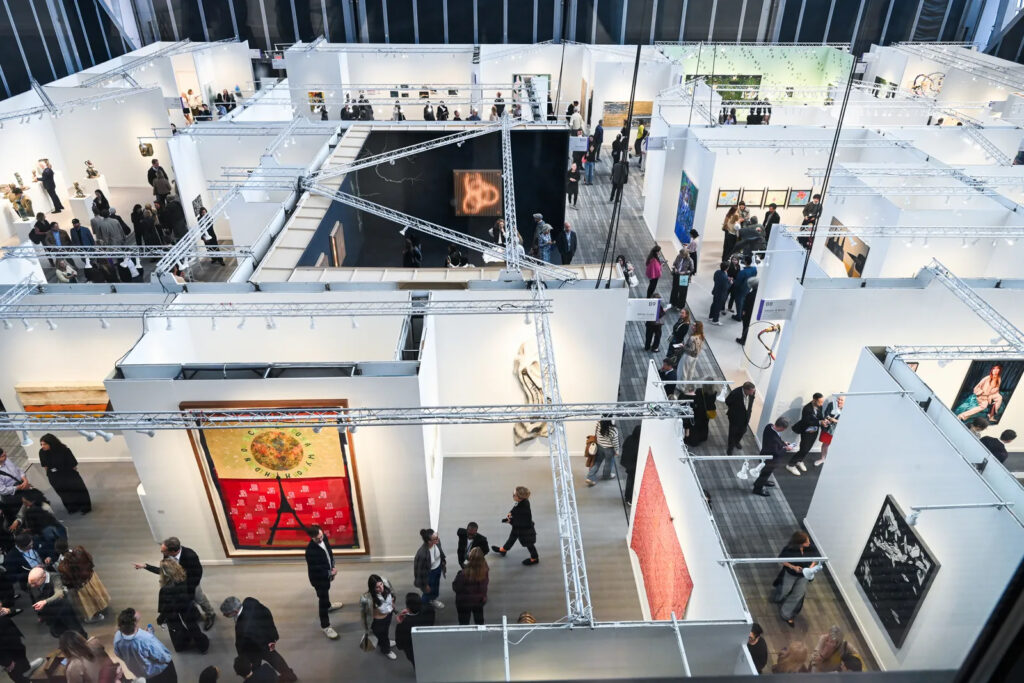
We all know that the industry calendar is jam-packed with art events around the world, but it seems unnecessarily hectic to have the Venice Biennale vernissage and New York’s May art fairs back to back. Four years ago, I did a 10-day bike trip across Italy in between the two, and it was truly the best.
This time around, I had to rush back across the Atlantic for the opening of Frieze New York, TEFAF, Independent, and the other fairs instead. Less than ideal—but great for keeping a newly freelance art journalist on her toes, I suppose. And I was excited to write about seven highlights from six of the fairs:
“7 Artists to Watch at the New York Fairs This Weekend” for CULTURED
But that article was just scratching the surface of the week’s offerings. I think I spent about 11 hours in total at the fairs, and I didn’t even make it to 1-54, despite it being in the same building as NADA.
I know that art fairs can feel a bit crass and commercial, and that some art publications will always beat their drum about how tired the whole circuit is. But I can’t help but love them. I see beautiful things, I learn about new artists, I have good conversations with colleagues who I genuinely like. I’m typically starving and exhausted the whole time, but I thrive on the adrenaline of it all.
Navigating the Fair Landscape
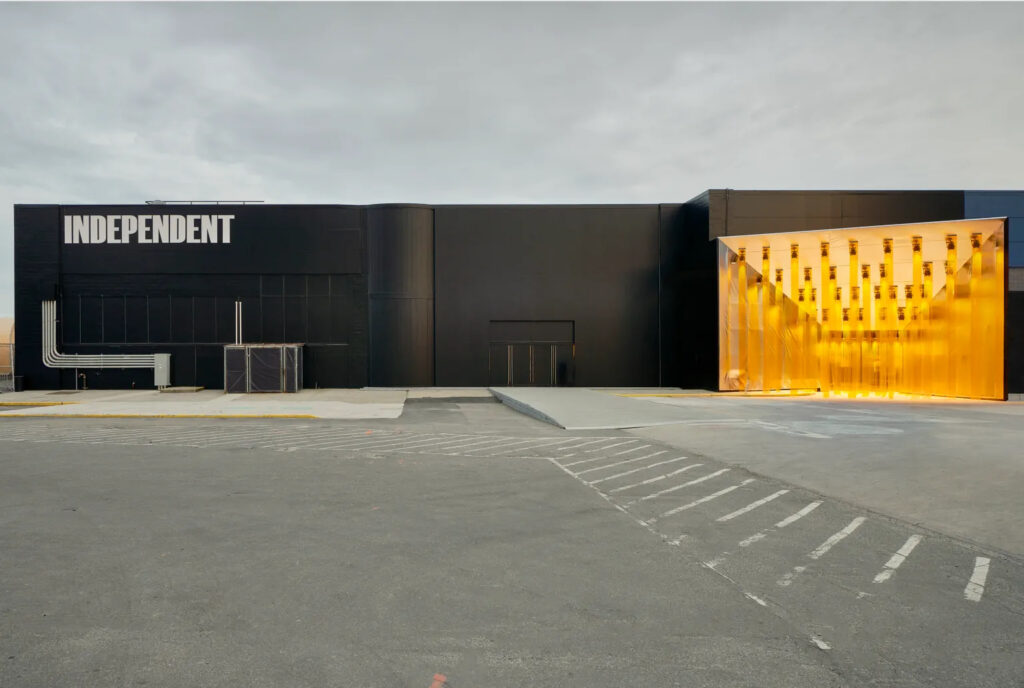
After a storied run at Spring Studios, Independent had new digs this year at Pier 36—formerly the hallowed halls of pandemic-era projected animated art sensation Immersive Van Gogh (and typically the host of Art on Paper, which promises to be back in September 2027).
My main critique of the venue was the complete lack of bike parking. That is honestly a problem at every fair, but there aren’t even sign poles to lock up on here, and it is a 12-minute walk from the subway. I got around by bike two of my three fair days during the week. I am confident it saved me tons of time, and it was also quite nice riding down the greenway. (The downside was getting chain grease on my legs, but hopefully no one noticed that.)
At Independent, I was particularly happy to see the striking two-person booth featuring Helina Metaferia and Joiri Minaya from Praise Shadows Art Gallery in Boston. I visited the gallery for the first time in December, because I wanted to catch the last day of Metaferia’s solo show. Imagine my surprise when I walked in during a champagne toast from owner Yng-Ru Chen, with just about every local museum director there celebrating the gallery’s imminent relocation from Brookline to a gorgeous new space on the Boston Greenway.
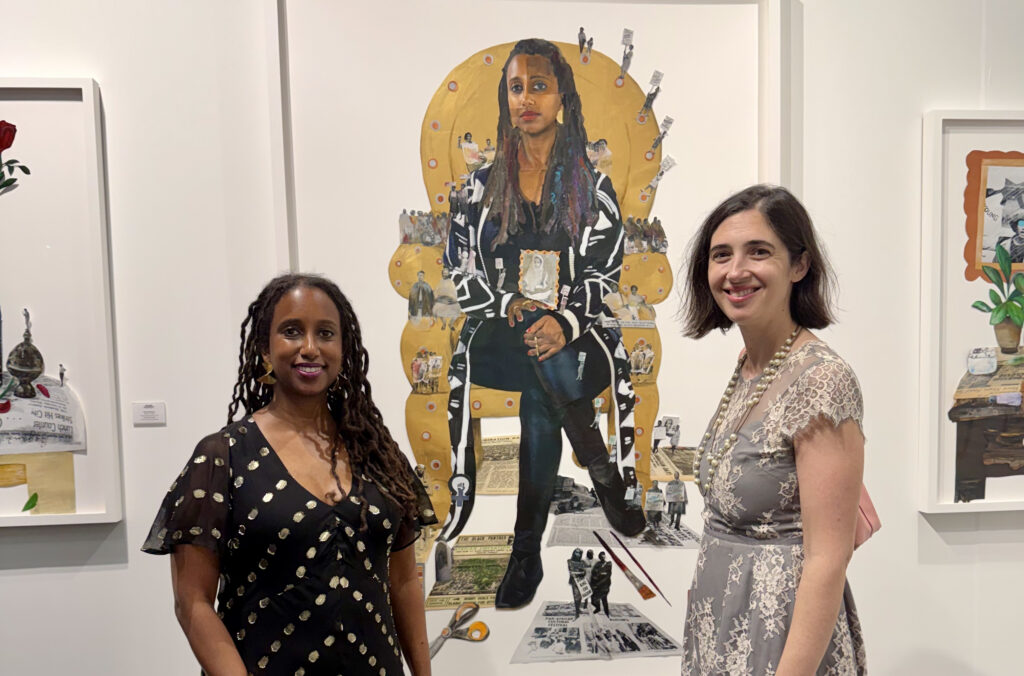
I was happy to announce the move, which came with help from Boston mayor Michelle Wu, and return for the opening of the inaugural show in March, which featured both Metaferia and Minaya, among other artists. It was so nice to see them all here in New York, with Minaya’s delicate gouache botanical paintings and Metaferia’s regal, nearly-life-sized collaged self-portrait Enthroned (Today I Feel I Am an Institution; I Am an Altar; I Am an Artwork in/of/for Progress).
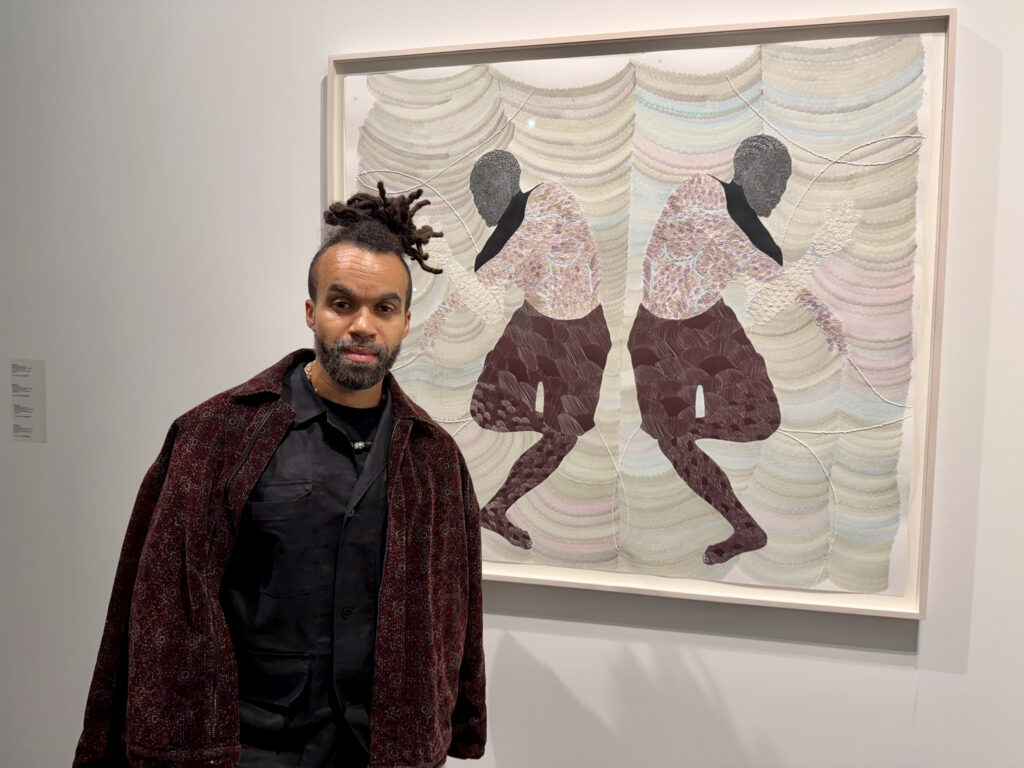
It was also wonderful to get to chat with Nate Lewis, who I’ve known for years, about his textured works on paper at Vielmetter Los Angeles. You really have to see his art in person to properly appreciate it. He utterly transforms the surface of the page with a profusion of tiny, delicate cuts. This precise mark making lends sculptural depth to once-flat surfaces covered in lyrical inkjet prints inspired by choreography and capoeira, the Afro-Brazilian martial art.
A Few More Favorites
I hadn’t been to NADA in a while, and I found I really enjoyed it. Some of the dealers I spoke to were concerned about a lack of sales and crowds, but for me, there were lots of moments of discovery.
Brooklyn’s Tappeto Volante Projects had some really fun sculptures by Keiko Narahashi—some of them were these kind of cartoony faces that had magnetic pieces you could move around. Just delightful and unexpected.
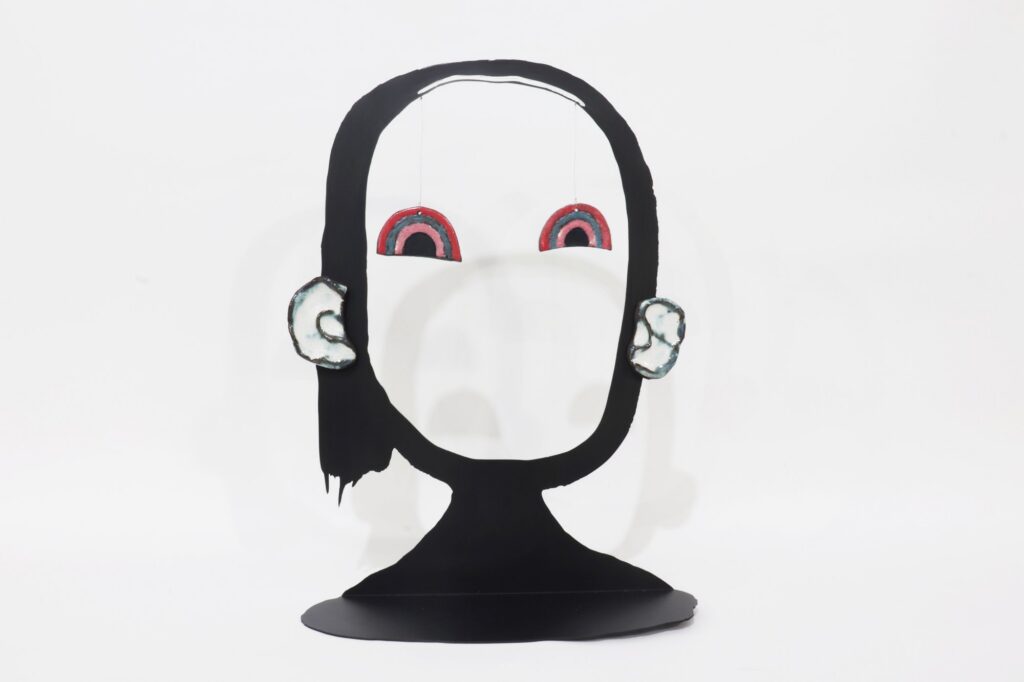
But the paintings were really stealing the show.
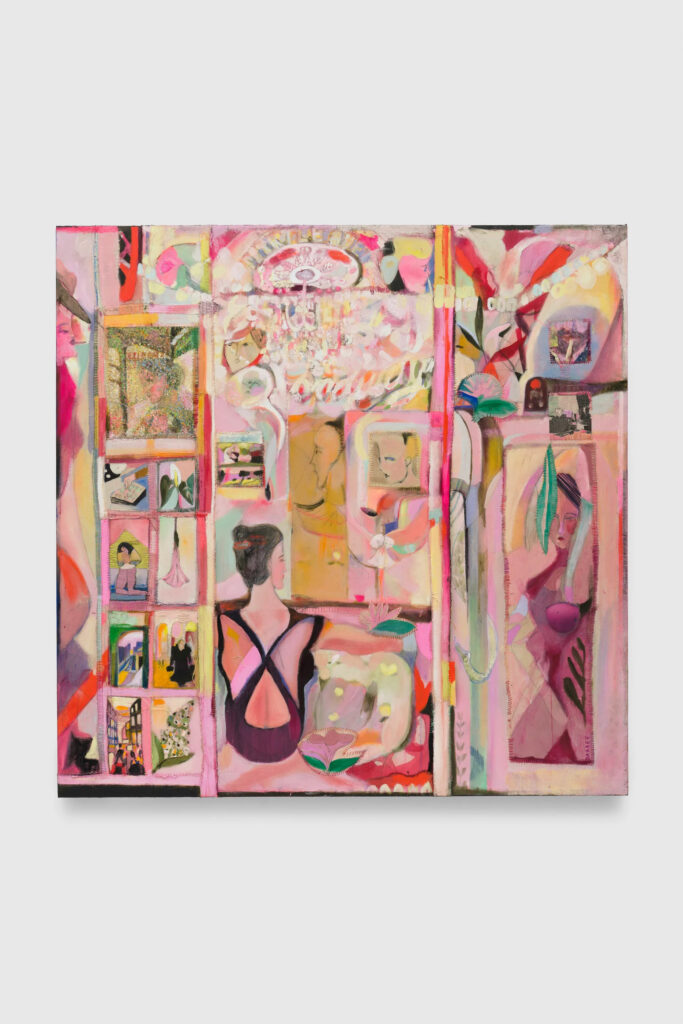
Kate Barbee with Mrs. in Queens had these gorgeous colorful canvases with female figures and lots of layers, stitching together smaller vignettes into large-scale compositions. The overall effect reminded me a little of fashion illustrations.
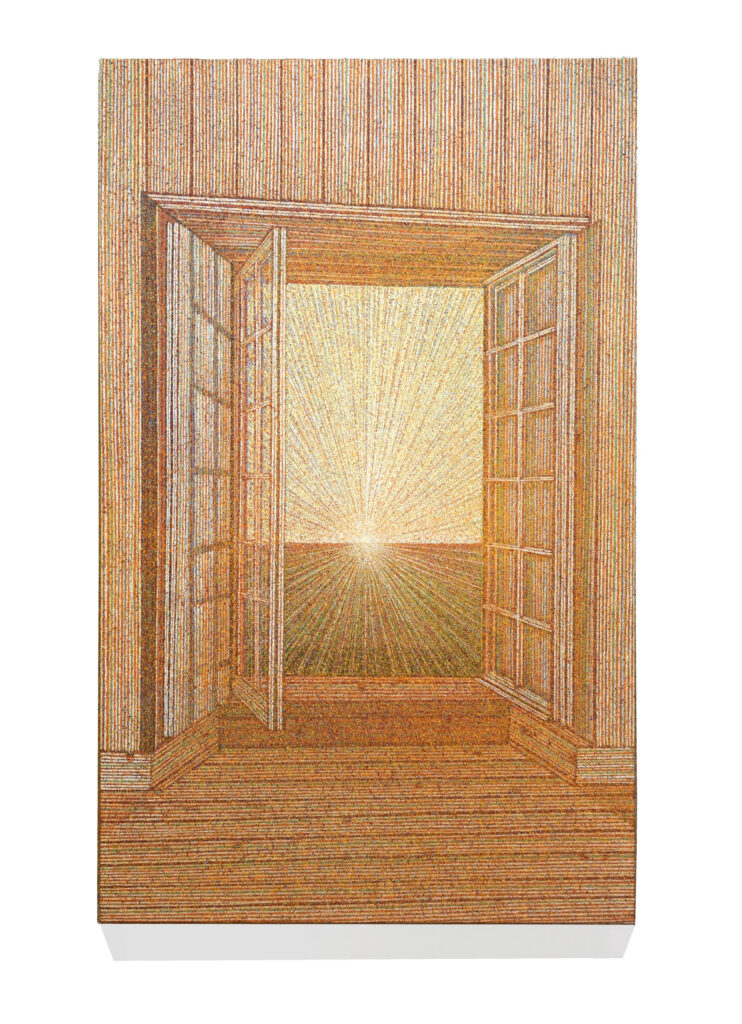
Los Angeles gallery Megan Mulrooney had a lovely window-themed booth, and the star was definitely a large, luminous canvas by Marco Bizzarri, inspired by his time in the Atacama Desert in northern Chile, with beams of golden light painted in an almost pointillist style.
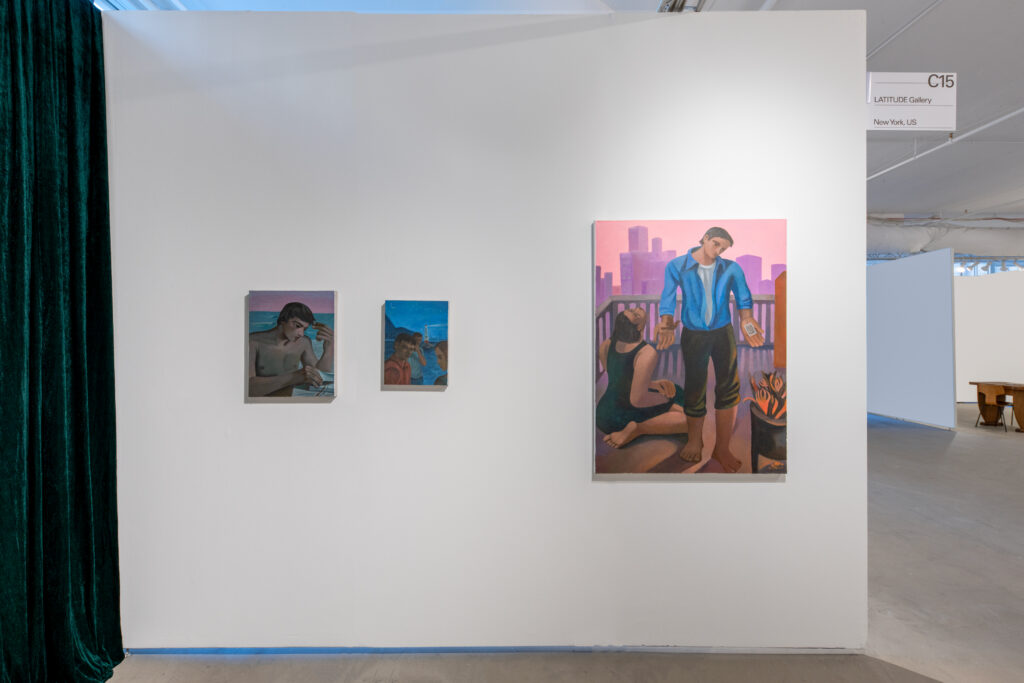
Shangfeng Zhang had a nearly sold-out showing with Latitude Gallery New York of quiet scenes of young men in their everyday lives, elevating quiet moments into a sort of contemporary mythology. The artist, who is from China, was born in 1998, but his work has an art historical quality, the stylized use of color and line recalling early 20th century Modernism and Art Deco.
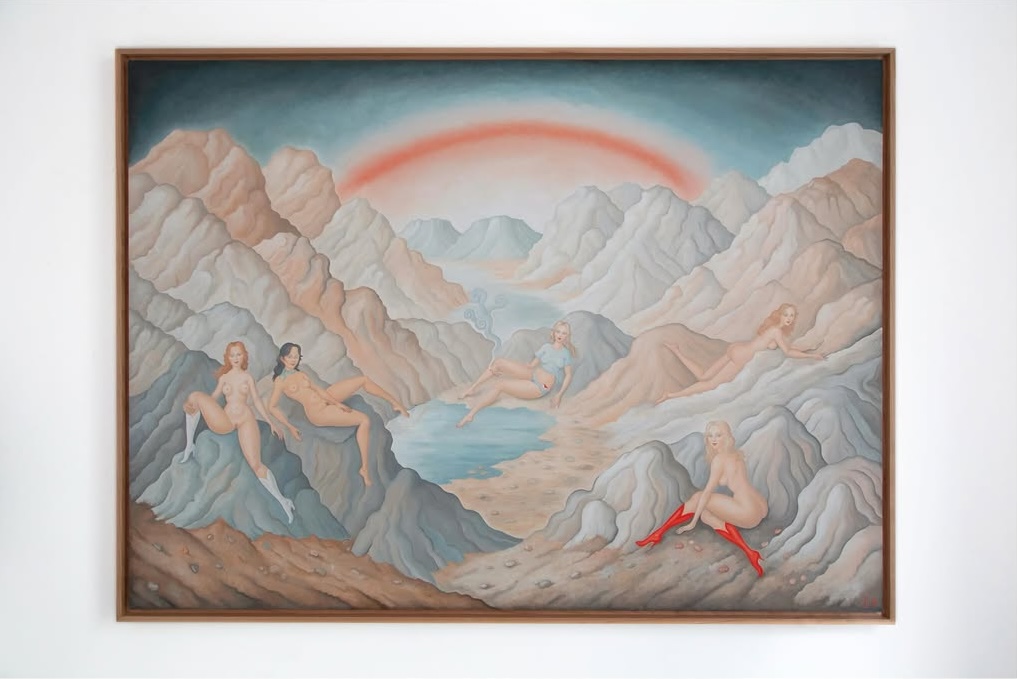
And then there was Lorena Lohr‘s Desert Nudes, the centerpiece of Soho Revue‘s presentation, a large, pastel scene with naked women perched on the stony hills. These sexy ladies recall the old-school glamour of pin-up girl illustrations, but Lohr is also drawing from art historical Biblical scenes of saints in the desert to create her dreamy tableaux.
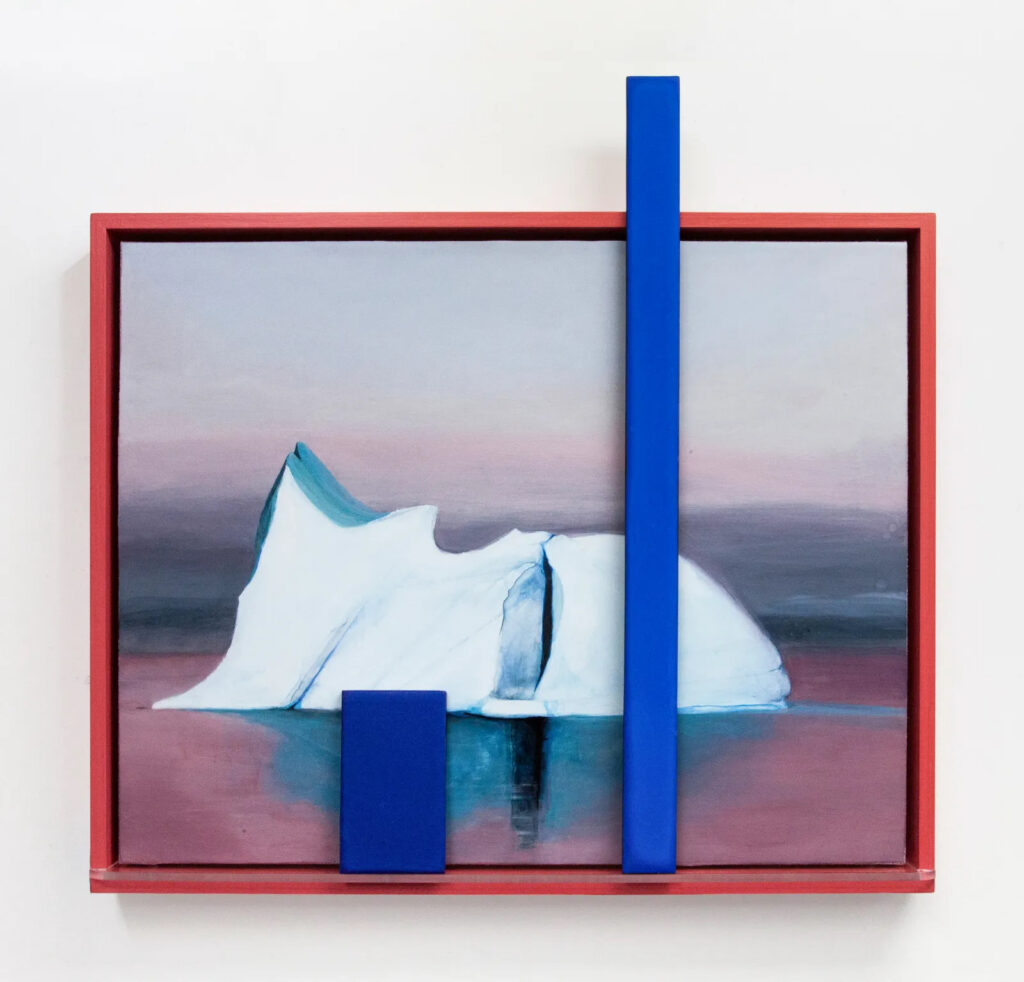
With a more glacial feel were new paintings by Sarah Anderson, a former art school classmate of New York dealer Robert Dimin who has maintained her own studio practice throughout years as working as an art handler. But until recently, that work has been focused more on Conceptual performance than on objects, and Dimin is her first time working with a gallery. Anderson’s new paintings blended watercolor and gesso with marble dust, and incorporated sculptural elements of wood and metal, as well as cast rubber frames.
Perfect Pairings
Occasionally, a gallery hit on a two-person presentations so well-matched that you would have believed it was showing the work of a single artist.
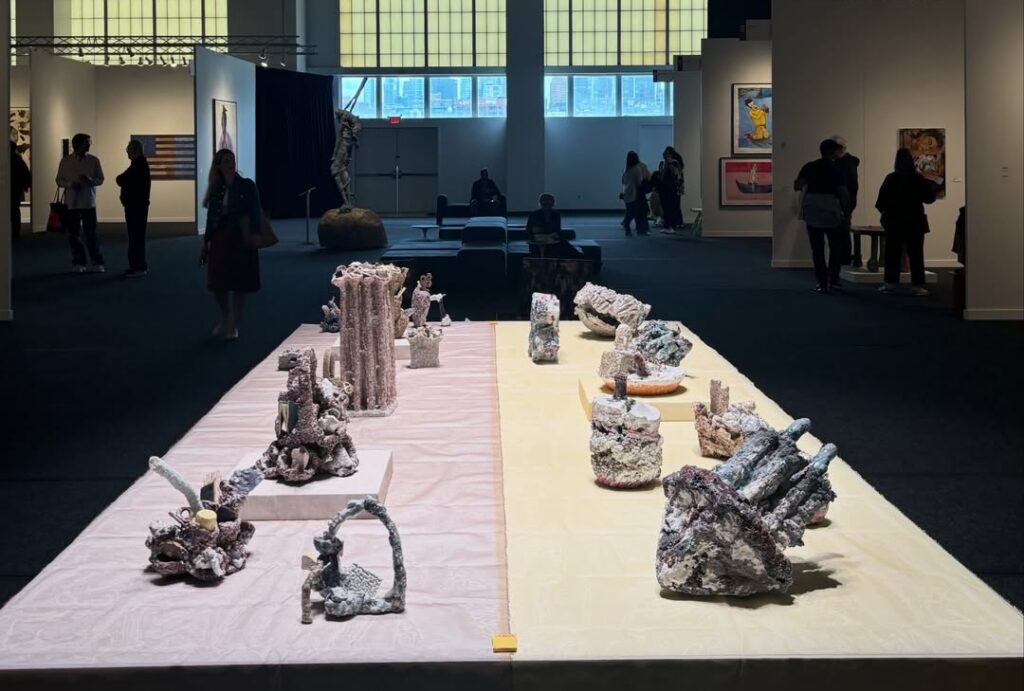
At Independent, Los Angeles’s Atla Works had a fantastic dual showing of abstract ceramics by two Japanese artists. Yoshikazu Tanaka transforms failed sculptures into new works, recombining broken pieces or grinding them up and adding them into the glaze, while Kuniko Kinoto uses clay to make assemblages incorporating natural stone elements. The works were on display on a low plinth in the middle of an aisle, and well worth an extended look.
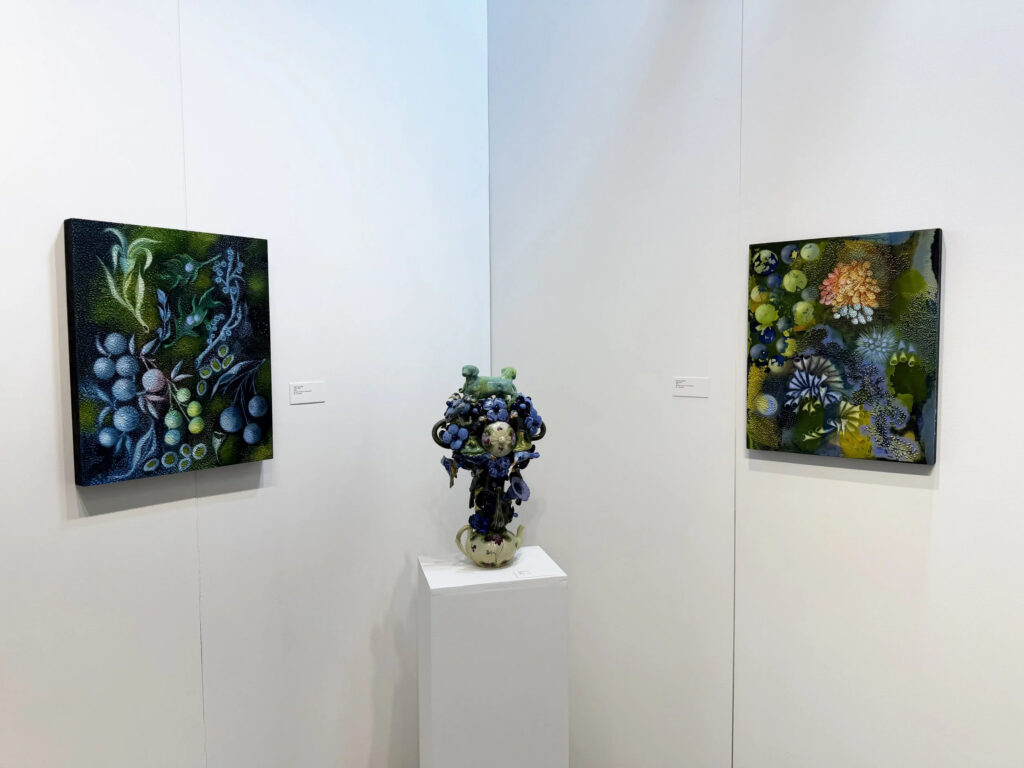
And at Future Fair, New York’s Nancy Hoffman Gallery had a gorgeous booth of ceramics by the mother-daughter team of Joan Bankemper and Sophie Bankemper Frances paired with paintings by Jody Guralnick. The two bodies of work shared a rich color palette and influence from nature, and Guralnick has begun adding a textural dimension to her watercolor works that enhanced the complementary nature of the pairing.
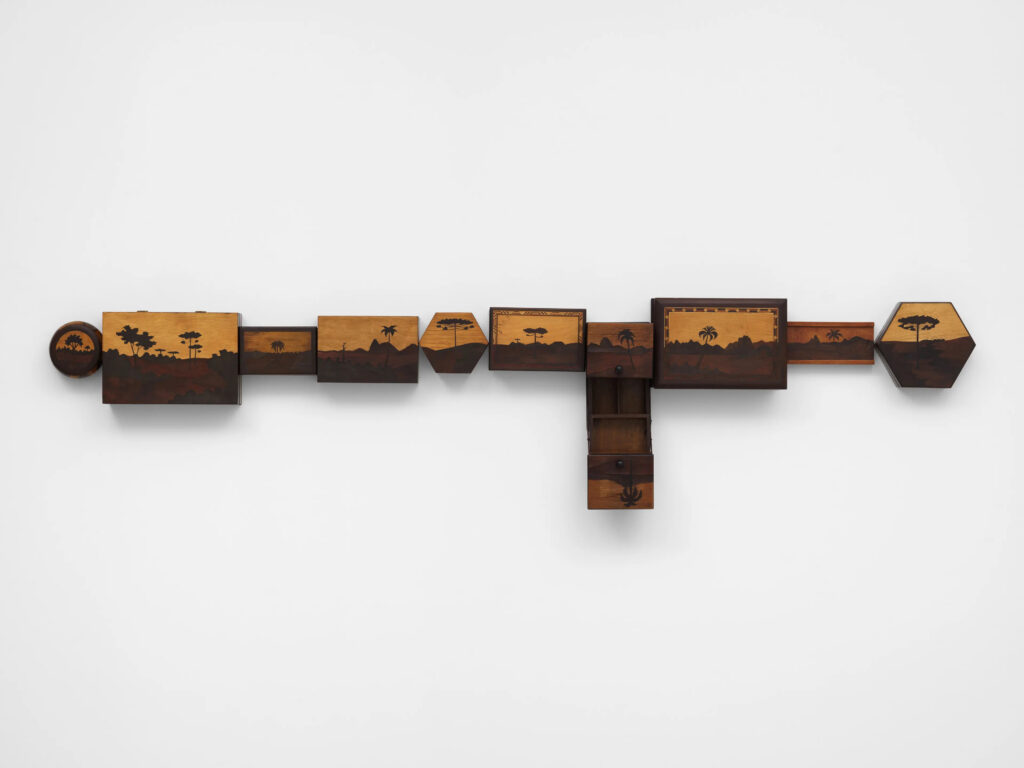
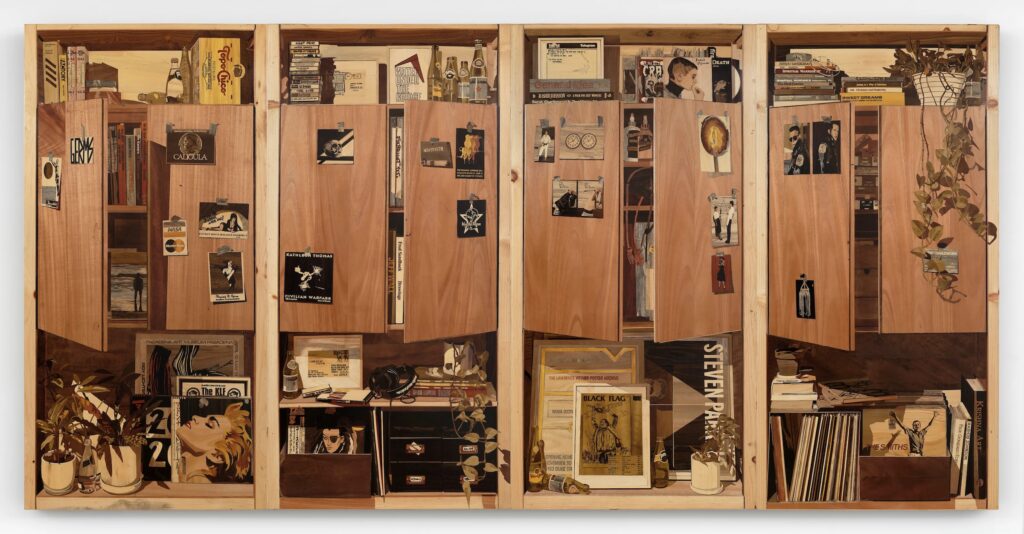
I also spotted two different artists employing the beautiful and unusual technique of intarsia or marquetry, creating inlaid compositions with thin slices of wood arranged like puzzle pieces. But, it turns out, the two were actually making very different kinds of work.
At Frieze with Brazil’s Fortes D’Aloia & Gabriel, Valeska Soares was working with vintage wooden boxes, arranging these found objects so that they appeared to form one cohesive composition, the horizon line extending the landscape from one box to another.
But Michael Bühler-Rose does all that intricate intarsia woodworking himself, and the result is absolutely stunning. His show-stopping multi-panel masterpieces at Independent, with Stems Gallery from Brussels, felt like a modern-day answer to the trompe l’œil still life, depicting shelves and cabinets from his studio. The tiny details, from a box of Topo Chico seltzer to a taped-up postcard for the 1979 Malcolm McDowell film Caligula, are rendered with absolutely photographic fidelity, exclusively using unpainted wood. It’s a wonder to behold.
Auction prices are soaring. Art companies are merging. Workers are paying the price. But even at the art fairs, I take comfort in such commitment to craft, to age-old techniques and tireless artistry. It’s a reminder that most of us still aren’t here for the business. We are here for the art.
If you enjoyed this piece, please subscribe for either a free or paid subscription. Your support of independent art journalism is greatly appreciated.
Response
Thank you thank you! Beautiful art and I love your descriptions. I especially like Untitled and Desert Nudes. And the gracefulness of the Nate Lewis. Eye candy, thanks again!