Cj Hendry and Lucy Sparrow, two artists known for creating wildly popular pop-up interactive art installations, are both currently staging their first big shows in conjunction with major art world establishments.
Sparrow, who hails from the U.K., just launched a year-long solo show, “The Beginning of Convenience,” at the Momentary, the contemporary art outpost of the Crystal Bridges Museum of American Art in Bentonville, Arkansas. Hendry, who is from Australia, is wrapping up “Pastel,” her 10-day exhibition at the esteemed Salon 94 gallery on New York’s Upper East Side.
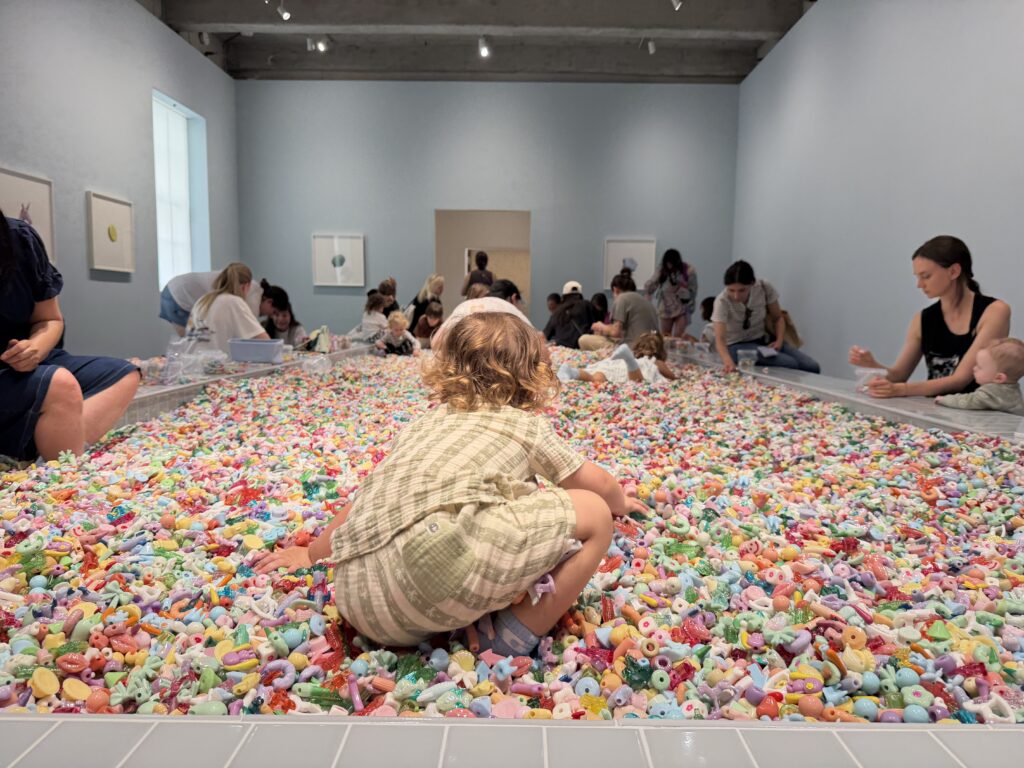
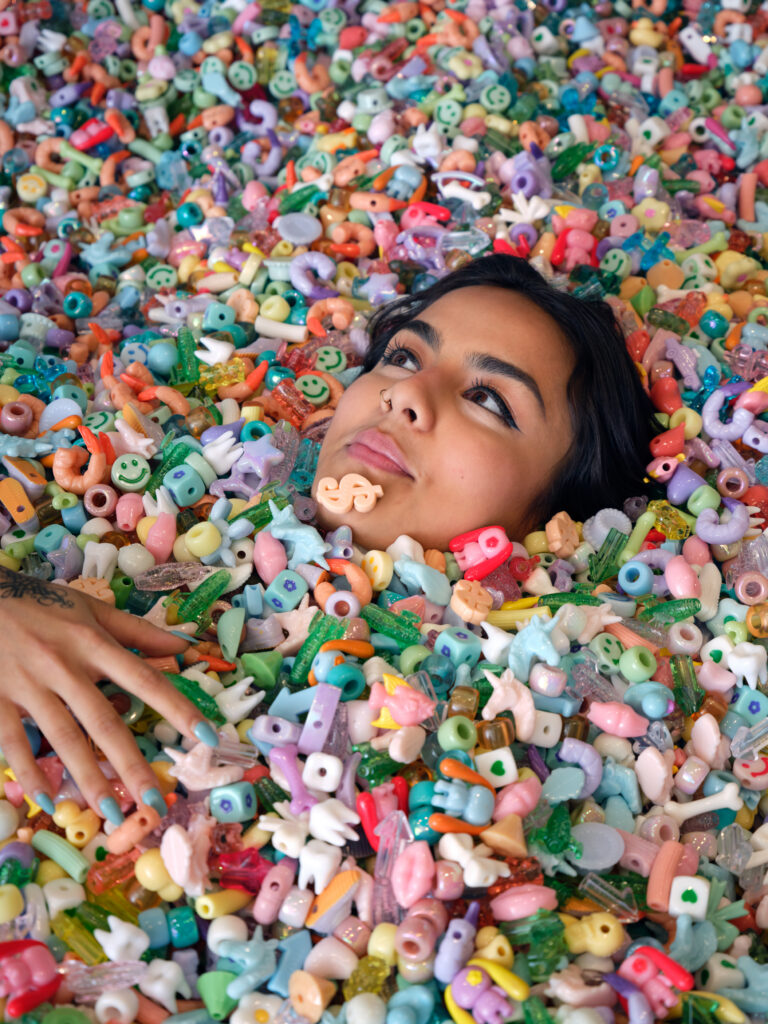
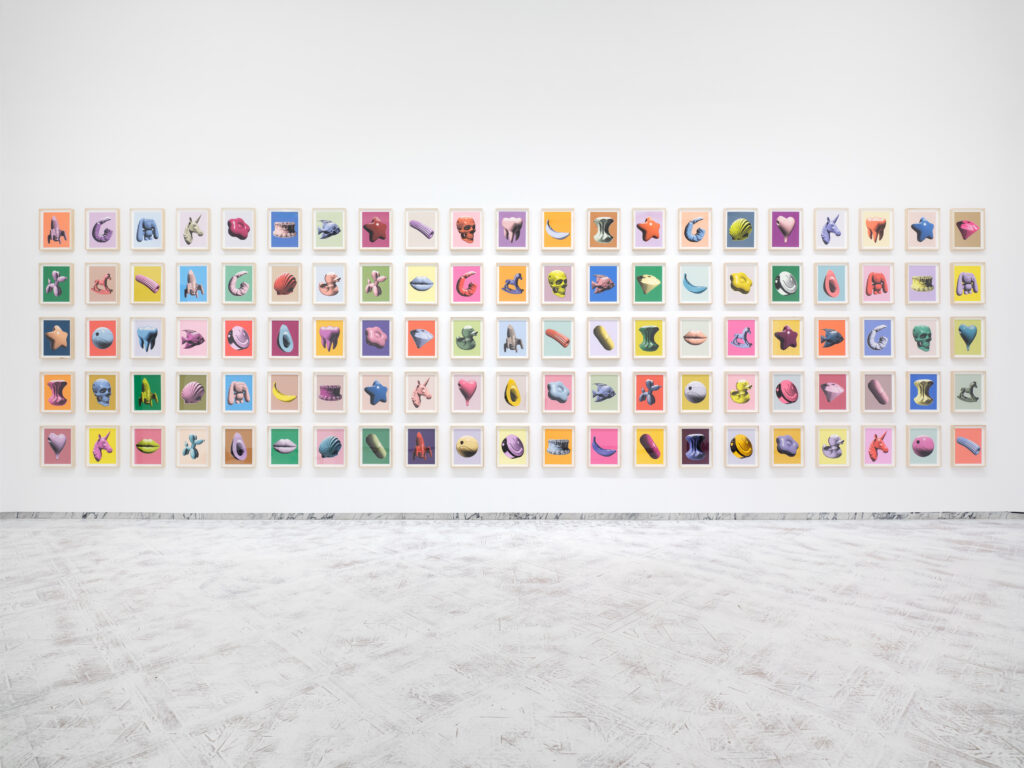
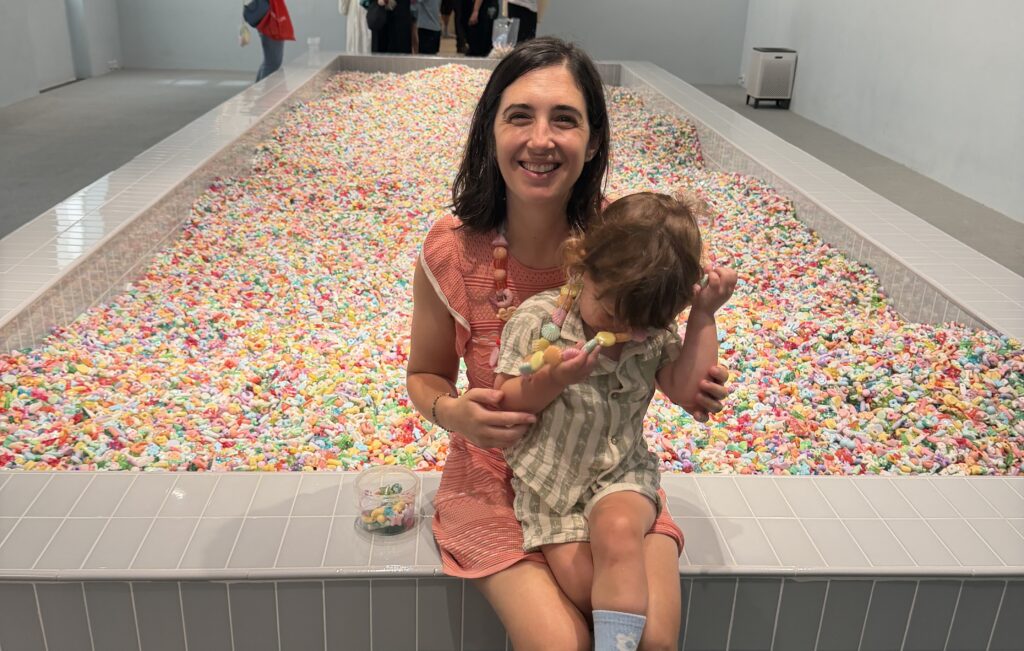
“Pastel” includes Hendry’s take on a ball pit, but instead of squishy balls, it’s filled with thousands of thousands of chunky plastic beads. Visitors are invited to don a pair of custom sky blue Hendry socks and dive right in. The shapes, all designed by Hendry, are references to some of her previous projects, as well as other well-known contemporary artworks, such as a Jeff Koons balloon dog and a Damien Hirst pill. (The pill is the rarest of the bead varieties.) Hendry has made drawings, prints, and an edition of bronze sculptures based on the bead designs.
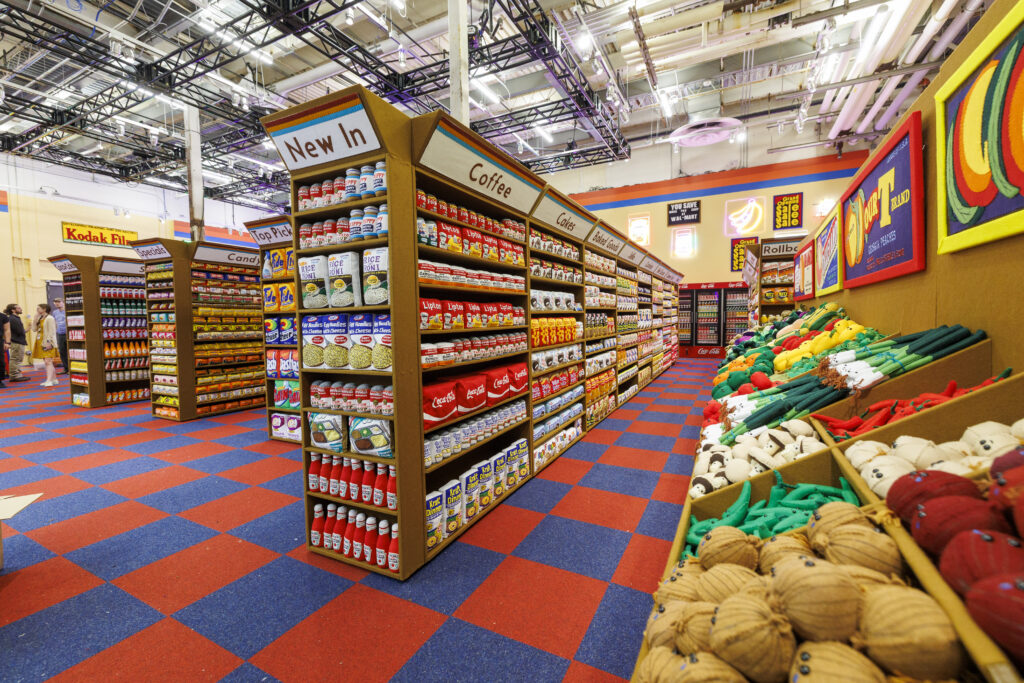
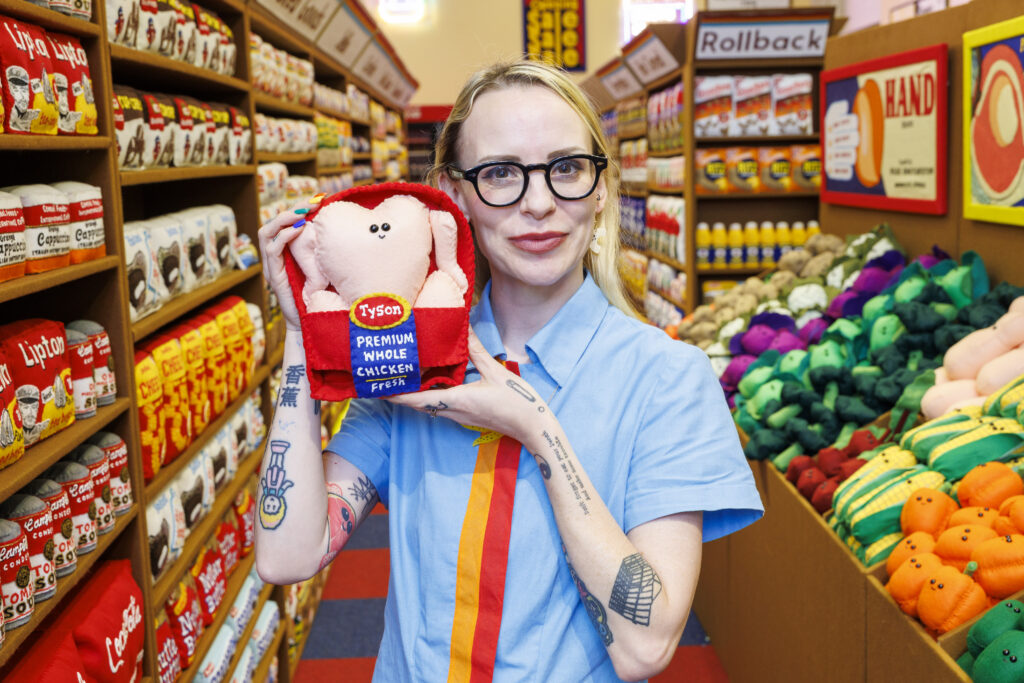
“The Beginning of Convenience” is Sparrow’s take on an old-school Walmart, the shelves of her sprawling supermarket installation stocked with felt versions of familiar products such as Tic Tac mints, Duracell batteries, Top Ramen instant noodles, and Tylenol, as well as fresh fruits and vegetables. She’s also built a reconstruction of her studio in Suffolk, which she’s dubbed the Felt Cave.
Artists With a Winning Formula
Both shows are free and open to the public. And there are some surface-level similarities between the two artists. Hendry is 38. Sparrow is 40. Both have considerable Instagram followings, although Hendry’s 1 million (up from 682,000 just three years ago) handily eclipses Sparrow’s 138,000. And both have seemingly cracked the code to making people excited about going to see and experience art—and their output can be quite affordable in a field often skewered for its astronomical prices.
But where Sparrow’s offerings are almost entirely handmade, meticulously hand-stuffed, -stitched, and -painted felt sculptures, Hendry supplements her insanely detailed hyperrealistic five-figure colored pencil drawings with mass-produced swag. Visitors get a plastic bucket for picking out beads, which cost $1 each, or $50 for a full bucket.
The show closes tomorrow and is almost sold out, with hours-long lines to get in. There were four drawings, at $29,900, that collectors snapped up before the opening. The framed prints on view at the gallery, for $499, are all gone, as are the rest of the editions, sold blindly at $199 each.
What I love about both Hendry and Sparrow is that they clearly take such joy from their practices, and in sharing them with the world. They each have a long history of dreaming up ambitious projects that make art fun, and I’ve been following them both closely for years.
The Felt Master Finds Her Way
I first spotted Sparrow’s work in March 2016—over a decade ago!—at the Affordable Art Fair in New York. She was showing with Tel Aviv’s Mika Gallery, which had tightly packed her soft sculptures into shadow boxes hanging on the walls. I was immediately charmed, and impressed by the sheer number of different types of candy and processed food she had faithfully rendered in felted form. But the display only hinted at the expanse of Sparrow’s artistic vision.
She had already had her artistic breakthrough two years prior, when she transformed an abandoned London storefront into Cornershop, selling her felted goods to an instantly smitten public. (In a 30-minute documentary produced for the show, Sparrow recalls her shock and amazement when she arrived to the exhibition on opening day to discover a line of would-be collectors snaking around the block.)
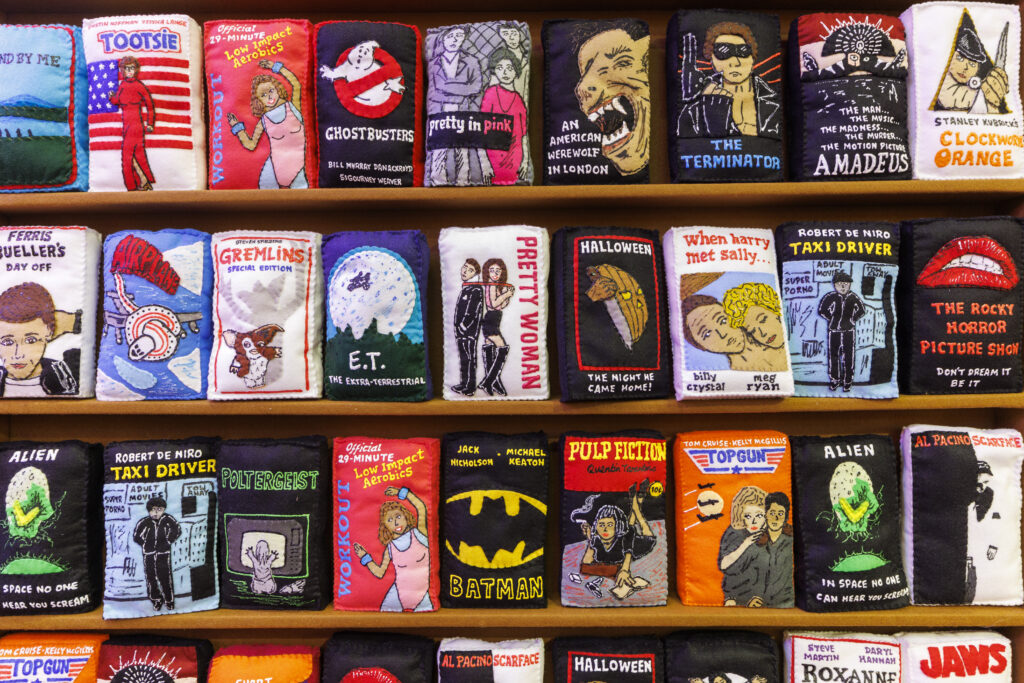
And Sparrow was already planning two bigger U.S. projects. That December, at SCOPE Miami Beach, she transformed part of the booth for London’s Lawrence Alkin Gallery into her take on a fast food delicatessen. (I met her for the first time there, and she told me “I went to a Subway and took loads of pictures.”)
The following June, she partnered with the Standard hotel to open a felt bodega in New York, funded largely by Kickstarter. (Full disclosure: I contributed £24, or about $32, and got a Reeses Peanut Butter Cup reward.) Visitors picked the shelves clean, and Sparrow had to end the show a week early when she basically sold out of the 9,000 sculptures she had produced for the occasion. I’ve since seen and written about many of her projects, including her McDonald’s, her bagel shop, her high-end grocer, her vegetable stand, and her candy shop.
Mixing Drawing and Spectacle
I learned about Hendry when my colleague and friend Eileen Kinsella covered her 2018 New York show “Monochrome,” featuring photorealistic drawings of crumbled Pantone cards in matching monochromatic rooms. The following year, Hendry was back with “Rorschach,” featuring drawings of what appeared to be blobs of paint folded in half to create inkblot-like designs. To see the art, you had to traverse a long, maze-like inflatable bouncy castle. It was the first time I met her, and experienced her unique blend of art and interactivity for myself.
In the years since, I’ve written about various Hendry projects, such as the documentary film tracking the exploits of her popular guerrilla series “Copyright Infringement,” in which she travels to cities around the world to stage impromptu scavenger hunts giving away swag she can’t sell because it copies someone else’s art.
Her drawings are undoubtedly impressive, showcasing her expert draftsmanship. But they sometimes feel secondary to the bells and whistles in a Hendry installation. Last September, at the second edition of “Flower Market,” the artist actually had to pull her drawings from the exhibition when she couldn’t trust that the partitions they were hanging on wouldn’t fall over amid the crowds and uneven bluestone pavers.
The artist’s big 2023 project, “Plaid,” has even enjoyed a second life post-exhibition, evolving into its own side hustle. For the show, Hendry designed and built an indoor playground in her former Greenpoint studio that now operates as Space Club, a beloved children’s play zone. Hendry has since opened two more locations, in DUMBO and Fort Greene.
I haven’t been to any of them since the exhibition, despite having a two-year-old boy who I’m sure would love it, but in my upper Manhattan family WhatsApp group, moms rave about it, despite their geographic remove. It was in a conversation there that I learned that at least one of the locations now has a bead pit, featuring regular pony beads—clearly a forerunner to “Pastel.” (A trip to Greenpoint may be in order, as my son, Zachary, absolutely had a ball in the bead pit, and has been showing off his fine motor skills by making necklaces with the beads we brought home.)
Why Team Up Now?
Sparrow’s nostalgic-fueled approach to retail made her a perfect fit for the Momentary and Crystal Bridges, a museum founded by Walmart heiress Alice Walton in the town where the massive discount chain was born.
On the other hand, Hendry’s unique flavor of social-media-savvy art might seem out of place at one of the city’s most beautiful Upper East Side galleries. But Hendry has always been open to working with a gallery. In 2019, she told me “of course I don’t want to handle everything myself!” And Salon 94 founder Jeanne Greenberg Rohatyn told me at the press preview that “Pastel” aligns closely with her vision for the business.
“I want the gallery to be a social space,” she said, wearing a surprisingly chic-looking necklace of mostly green beads. “And especially when so many collectors are out of town, why not make some new collectors?”
Hendry is also teaming up with Phillips Auction House later this month to unveil a trading card project. The third edition of “Flower Market” is opening at Rockefeller Center in late September. She is also renting out the Brant Foundation in the East Village for a collaboration with skincare brand Sulwhasoo. It will feature a garden installation of interlocking wooden flowers inspired by 3D dinosaur puzzle toys.
Despite the ritzy setting, “Pastel” pretty much follows Hendry’s standard playbook, with drawings and a related interactive element.
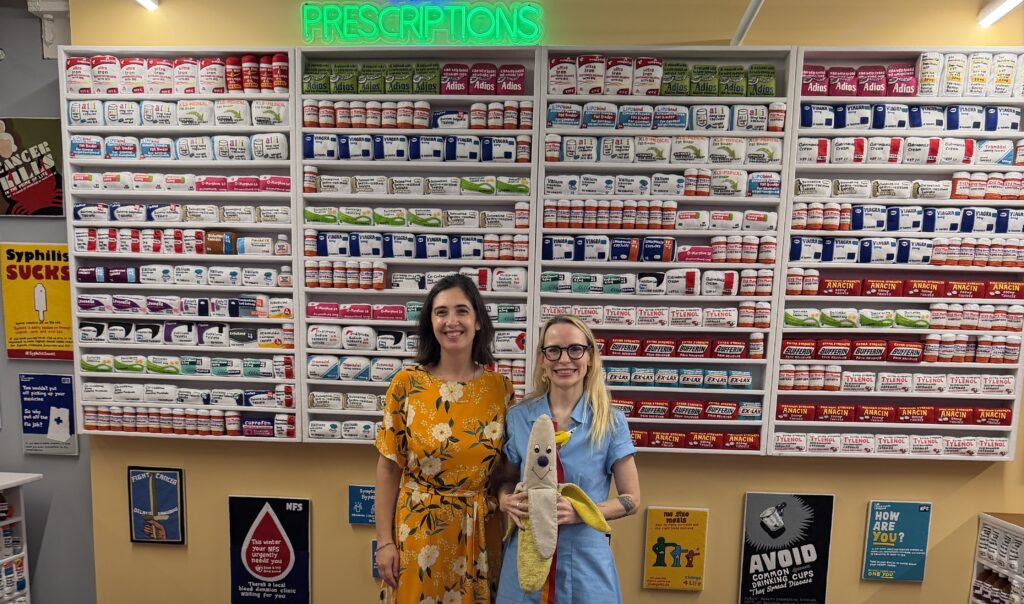
“The Beginning of Convenience,” on the other hand, is a major shift for Sparrow. Normally, every piece of felt is for sale, and visitors can shop the shelves—and pick them bare. Restocking “products” throughout a show’s run is perhaps the most exhausting part of the experience, with Sparrow helping staff the show all day and then sewing and painting late into the night.
At the Momentary, typical “no touching” museum rules are in place, and the only works for sale are in the gift shop. There, prices range from $50 for a vintage-style Pepsi can to a $120 bunch of bananas. That means Sparrow can head back to the U.K. to work on bringing her next big vision to life, without having to worry about keeping up with demand in Bentonville.
“I’d be lying if I said I didn’t enjoy the hysteria, with people getting excited,” Sparrow admitted to me. “But this is a lot less stress!”
Leave a Reply